
What is holistic psychology?
The word "holistic" comes from the Greek "holon", meaning "whole". Holistic psychology sees a person as a whole: thoughts, feelings, body, relationships and daily habits affect one another and can't be examined entirely separately.
The idea is neither new nor "alternative". Since 1977, when the psychiatrist George Engel proposed the biopsychosocial model, health science has recognised that our health is shaped at the same time by biological, psychological and social factors.
What does this mean in practice?
Anxiety, for example, isn't only "in the mind". It shows up:
- in the body: tight shoulders, fast breathing, poor sleep, a "knot" in the stomach,
- in thoughts: "something bad will happen", "I won't manage",
- in behaviour: procrastination, withdrawal, more coffee or screen time.
And it works the other way too: when we sleep little, move very little or eat in a hurry, our mood is affected. The holistic view asks: what is happening on all these levels together?
How body, sleep, diet and thoughts connect
Research shows more and more clearly how closely they are linked:
- Sleep. An analysis of 65 studies showed that when sleep improves, depression, anxiety and stress improve too. It's not only that anxiety disrupts sleep, but also that poor sleep feeds anxiety.
- Movement. Physical activity noticeably reduces symptoms of depression and anxiety.
- Diet. In a study of adults with depression, those who improved their diet (more vegetables, fruit, legumes, fish, olive oil, something very close to the Mediterranean diet) improved more than those who received social support alone.
- Breathing. Slow breathing, with a longer out-breath, calms the nervous system within a few minutes.
None of these replaces psychotherapy. All of them, though, can make it more effective.
What does a holistic session look like?
In sessions we work on three sides, depending on what you need:
- Thoughts and feelings: tools from Cognitive Behavioural Therapy (CBT) for the patterns that keep us stuck, and from Neuro-Linguistic Programming (NLP) to see a difficulty from another angle.
- Body: breathing, relaxation and mindfulness, to calm the nervous system.
- Daily life: sleep, movement and your relationship with food, with a focus on motivation and consistency.
What changes when all levels work together
What changes first, almost always, is anxiety.
When we become aware of all the levels (what I think, what my body feels, how I sleep, how I move, what's happening in my relationships and at work), opportunities and choices appear that we couldn't see before. Each person can sort them out in their own order and take some weight off their mind. Daily life becomes calmer, not because the difficulties disappeared, but because there is now room to handle them.
An example journey
This example is fictional and combines elements from many stories.
Eleni, 34, gets in touch to manage the anxiety she feels at work, because she believes her manager doesn't respect her. She sleeps 5 hours, eats standing up, mostly sandwiches, pasta and burgers, and for years hasn't consciously exercised her body. The thought that keeps coming back: "Whatever I do, it's never enough. I'm letting everyone down."
- In the first weeks we look at what happened: her version of events, how she felt and why she believes things happened the way they did.
- Next we break down the cognitive distortions, such as "never enough", and build a gentler, friendlier view of herself, her efforts and the people around her.
- We explore her values and find her core, to understand where this thought comes from and, in turn, her behaviour.
- We set clear and steady boundaries: we define what respect means to her and how she expects it to show up in her relationships.
- At the same time we focus on the areas she had neglected in recent months, body, exercise, sleep and diet, to strengthen them.
- After a few months, and after mindfulness exercises that have taken her off "autopilot", the anxiety hasn't disappeared, but it no longer runs her life. Eleni has ways to handle it when it shows up.
No single change would have been enough. Together, they made the difference.
Who it suits, and who it doesn't
A holistic approach suits you especially if:
- you feel anxiety or stress in your body too,
- you want practical tools for daily life, not just conversation,
- you see that sleep, movement or your relationship with food affect your mood,
- you feel trapped in your choices or in your body,
- you want to work consistently over a period of time, not only in a crisis.
It may not be the first step when there is an acute crisis, a serious psychiatric condition that first needs medical care, or a serious eating disorder. In these cases, working with a psychiatrist or doctor is needed, and psychotherapy is adapted accordingly.
What it is not
Holistic psychology does not replace medical care and is not an "alternative therapy" without evidence. It uses evidence-based psychological methods and, when needed, works together with doctors, dietitians or other professionals. It doesn't promise miracles and doesn't ask you to "think positive".
A small exercise for today
Stop for one minute and ask yourself: "What am I thinking, what am I feeling, and what is my body doing right now?" This simple question is the first step of holistic self-awareness.
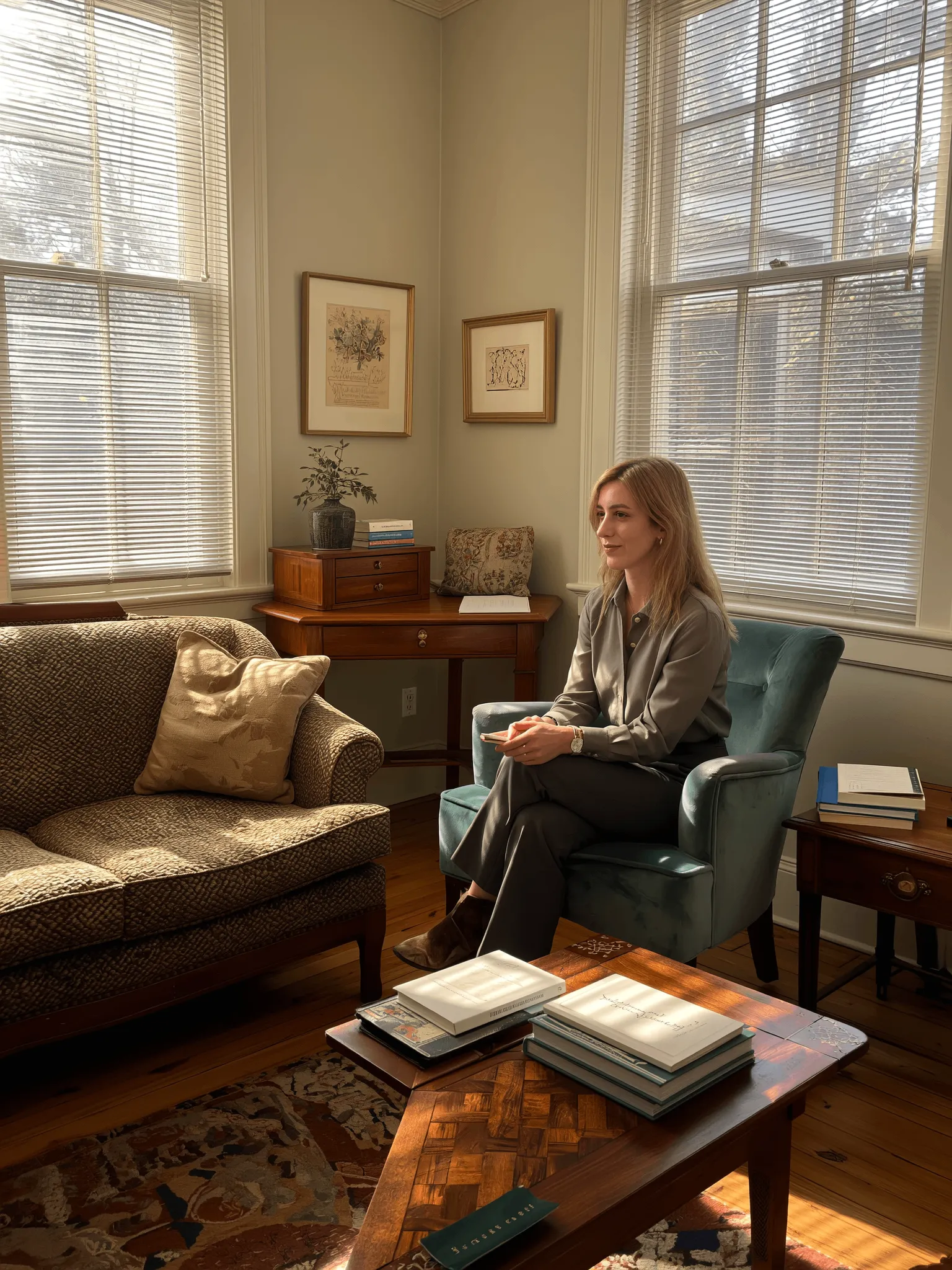
Written by
Aristea Kontokosta, Psychologist
BSc in Psychology (University of Ioannina) and Adult Educator certification (University of Macedonia), with training in Cognitive Behavioural Therapy and NLP. She works with anxiety, depression, habits and holistic wellness, online and in person in Kallithea, Athens.
Sources
- Engel, G. L. (1977). The need for a new medical model: A challenge for biomedicine. Science, 196(4286), 129–136.
- Scott, A. J., Webb, T. L., Martyn-St James, M., Rowse, G., & Weich, S. (2021). Improving sleep quality leads to better mental health: A meta-analysis of randomised controlled trials. Sleep Medicine Reviews, 60, 101556.
- Jacka, F. N., O'Neil, A., Opie, R., et al. (2017). A randomised controlled trial of dietary improvement for adults with major depression (the 'SMILES' trial). BMC Medicine, 15, 23.
- Singh, B., Olds, T., Curtis, R., et al. (2023). Effectiveness of physical activity interventions for improving depression, anxiety and distress: An overview of systematic reviews. British Journal of Sports Medicine, 57(18), 1203–1209.
- Balban, M. Y., Neri, E., Kogon, M. M., et al. (2023). Brief structured respiration practices enhance mood and reduce physiological arousal. Cell Reports Medicine, 4(1), 100895.